ワールドカップ — マスコットとボール.
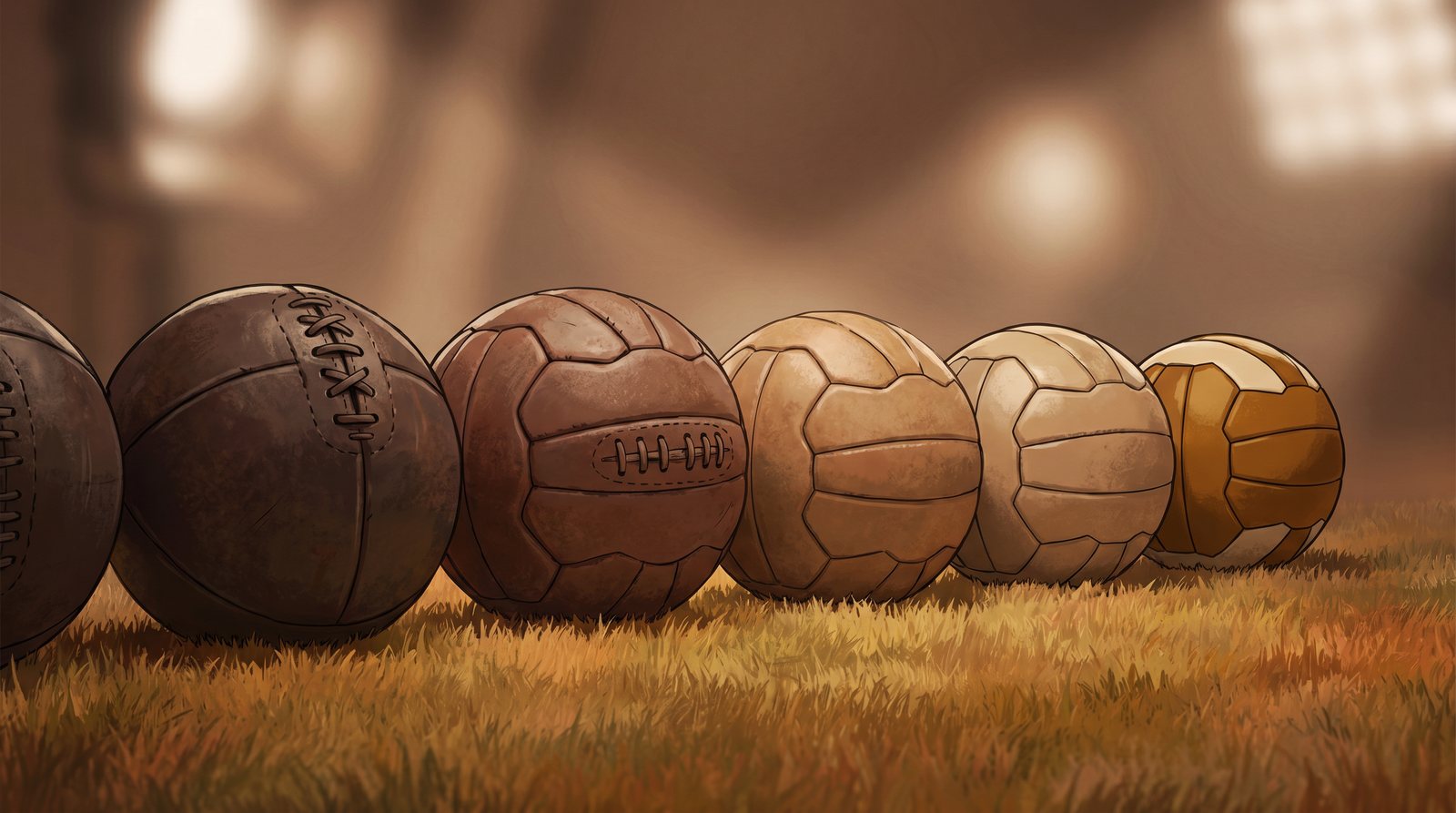
World Cup mascots & official balls (1966-2026)
Mascots since 1966 (World Cup Willie); official balls branded since 1970 (Adidas Telstar). Every edition's identity is below.
| Year | Mascot | Official ball |
|---|---|---|
| 1966 | World Cup Willie The first World Cup mascot — a lion wearing a Union Jack jersey, designed by British illustrator Reg Hoye. Featured on TV title sequences and merchandise. | Slazenger Challenge 4-star Made by Slazenger; orange/tan leather; controversial selection (FIFA originally wanted Adidas to provide it). |
| 1970 | Juanito A boy in a Mexico sombrero and a green-white-red sash. The name is the diminutive of "Juan", a common Mexican boy's name. | Adidas Telstar First Adidas-made World Cup ball. The black-and-white 32-panel design became the universal "football" icon — chosen to be more visible on black-and-white TV. |
| 1974 | Tip and Tap Two German boys in WM 74 shirts, paired to represent partnership. The first dual-character mascot. | Adidas Telstar Durlast Improved version of the 1970 ball with polyurethane coating for water resistance. Same iconic look. |
| 1978 | Gauchito A young Argentine gaucho with a hat, neckerchief, and whip. Designed by Manuel García Ferré. | Adidas Tango Iconic 20-triad design that defined the "football look" for two decades. Variations were used at every Adidas tournament until 1998. |
| 1982 | Naranjito An anthropomorphic orange in a Spain kit — a tribute to Valencia's citrus industry. Designed by María de Dolores Salto and José María Martín Pacheco. | Adidas Tango España Iteration of the Tango with sealed seams for added water-tightness. |
| 1986 | Pique A jalapeño pepper wearing a sombrero and moustache, representing Mexican spice. Pronounced "pi-kay". | Adidas Azteca First synthetic World Cup ball — fully polyurethane, decorated with Aztec/Mexican architectural motifs. |
| 1990 | Ciao A stick-figure made of red, white and green blocks (Italian flag colours) topped with a football for a head — modernist art for the digital age. | Adidas Etrusco Unico Decorated with three lion heads inspired by Etruscan art. The internal foam-rubber layer made it the most controlled ball of its era. |
| 1994 | Striker A dog in a Team USA kit, designed by Warner Bros. — the first WC mascot from a major animation studio. | Adidas Questra First ball with a polystyrene foam outer layer, making it lighter and faster than previous balls. Five-pointed star design. |
| 1998 | Footix A blue cockerel — the Gallic Rooster (le coq gaulois), traditional symbol of France. Designed by Fabrice Pialot. | Adidas Tricolore First multi-coloured World Cup ball — blue/red/white in a Tango pattern. Introduced a syntactic foam layer that made it ~10% lighter. |
| 2002 | Ato, Kaz and Nik Three computer-animated alien characters in orange/purple/blue, designed by FIFA and Korea/Japan organising committees. The trio was named "the Spheriks" in promotional materials. | Adidas Fevernova First ball designed without the Tango pattern in 30 years. Triangular star design with red/yellow Asian-inspired motifs. |
| 2006 | Goleo VI and Pille A lion ("Goleo") + a talking football ("Pille"). The German company NICI that made the toys went bankrupt during the tournament due to disappointing sales. | Adidas +Teamgeist 14-panel design (down from 32) reduced seam length by 15%; first ball thermally bonded rather than stitched. |
| 2010 | Zakumi A leopard with green dreadlocks — the name combines "Za" (South Africa) and "kumi" (ten in many African languages, for 2010). | Adidas Jabulani 8-panel 3D-shaped ball, "Jabulani" means "to celebrate" in Zulu. Heavily criticised by goalkeepers for its unpredictable trajectory. |
| 2014 | Fuleco A three-banded armadillo, native to Brazil and endangered. Name combines "Futebol" + "Ecologia". | Adidas Brazuca 6-panel ball that addressed Jabulani criticisms; named by Brazilian fans in a public vote. Adidas said it was their most-tested ball ever before release. |
| 2018 | Zabivaka A wolf in football gear and goggles. Name means "the one who scores" in Russian. Chosen by Russian public vote. | Adidas Telstar 18 A 50-years-later revival of the 1970 Telstar design, with the original 6-panel pattern updated. Embedded NFC chip for the first time. |
| 2022 | La'eeb Translates as "super-skilled player" in Arabic — an animated keffiyeh (traditional headdress). The official tagline was "everyone, everywhere — to dream". | Adidas Al Rihla Arabic for "the journey". 20-panel construction with embedded motion sensor for VAR semi-automated offside. |
| 2026 | Maple, Zayu and Clutch First three-mascot World Cup — Maple the moose (Canada), Zayu the jaguar (Mexico), Clutch the bald eagle (USA), one per host nation. | Adidas Trionda First multi-host official ball, with a tri-coloured pattern representing the three host nations. The Trionda has the most embedded sensor tech of any WC ball to date. |
Trivia & firsts
First mascot: World Cup Willie (1966 England) — a lion in a Union Jack jersey.
First Adidas ball: Telstar (1970 Mexico) — black-and-white 32-panel design for TV visibility.
First dual-character mascot: Tip and Tap (1974 West Germany).
First three-mascot edition: Maple/Zayu/Clutch (2026 USA/Canada/Mexico).
Most controversial ball: Jabulani (2010 South Africa) — heavily criticised by goalkeepers for trajectory.
NFC-embedded ball debut: Telstar 18 (2018 Russia). Motion sensor for VAR: Al Rihla (2022 Qatar).
See also: トーナメント for the full per-edition profile (attendance, total goals, etc.), and supporters for fan culture per country.
順位表とランキングポイントは試合終了後に更新されます。 順位表 · 試合日程 · ワールドカップ 2026